
An ankle sprain is one of the most common injuries treated in orthopedic care. Most people call it a “twisted ankle,” which can happen during sports, on uneven ground, or even from a simple misstep. While it may seem minor at first, if you do not fully rehabilitate your ankle sprain, you can develop long-term issues. Many patients feel better within a short time; however, recovery is not complete until strength, balance, and stability have been restored.
A sprain occurs when you stretch or tear the ligaments that support your ankle. These ligaments help keep the joint stable, especially during movement. Most injuries occur when the foot rolls inward, placing stress on the ligaments along the outside of the ankle and resulting in pain, swelling, bruising, and difficulty walking. You may also notice that your ankle feels weak or unsteady, especially when you try to return to normal activity.
One of the most important things to understand about an ankle sprain is that feeling better does not necessarily mean the ankle has fully healed. Pain and swelling often improve before the body regains normal strength and control. This is where rehabilitation becomes especially important. Without it, the ankle may remain vulnerable, increasing the risk of another sprain.
Early treatment
Historically, treatment for ankle sprains often centered on the well-known “RICE” method: rest, ice, compression, and elevation. While these strategies can still play a role in managing early symptoms, current rehabilitation approaches place a greater emphasis on active recovery. A more modern framework, known as “PEACE and LOVE,” highlights the importance of both early protection and a gradual return to movement.
The “PEACE” method focuses on the first few days after injury. This includes protecting the ankle from further harm, elevating it to reduce swelling, avoiding anti-inflammatory medications, and using compression as needed. It also emphasizes education by helping you understand your injury and by discouraging over-treatment. Notably, the approach recommends limiting the routine use of anti-inflammatory medications early on, as inflammation is a natural part of the body’s healing process.
Rehabilitation
 The “LOVE” approach marks the next phase of recovery and focuses on active rehabilitation. This includes gradually loading the ankle through movement and weight-bearing activities, maintaining a positive outlook during recovery, increasing vascularization (blood flow) through light activity, and performing targeted exercises. Shifting away from prolonged rest encourages patients to begin moving sooner, which can promote healing and prevent stiffness and weakness.
Rehabilitation focuses on helping the ankle move well, feel strong, and respond appropriately to changes in movement. Early in the recovery process, the goal is to restore motion. Gentle exercises, such as slowly moving the foot up and down or tracing the alphabet in the air, can help reduce stiffness and improve circulation. The small movements may seem simple, but they play an important role in the healing process.
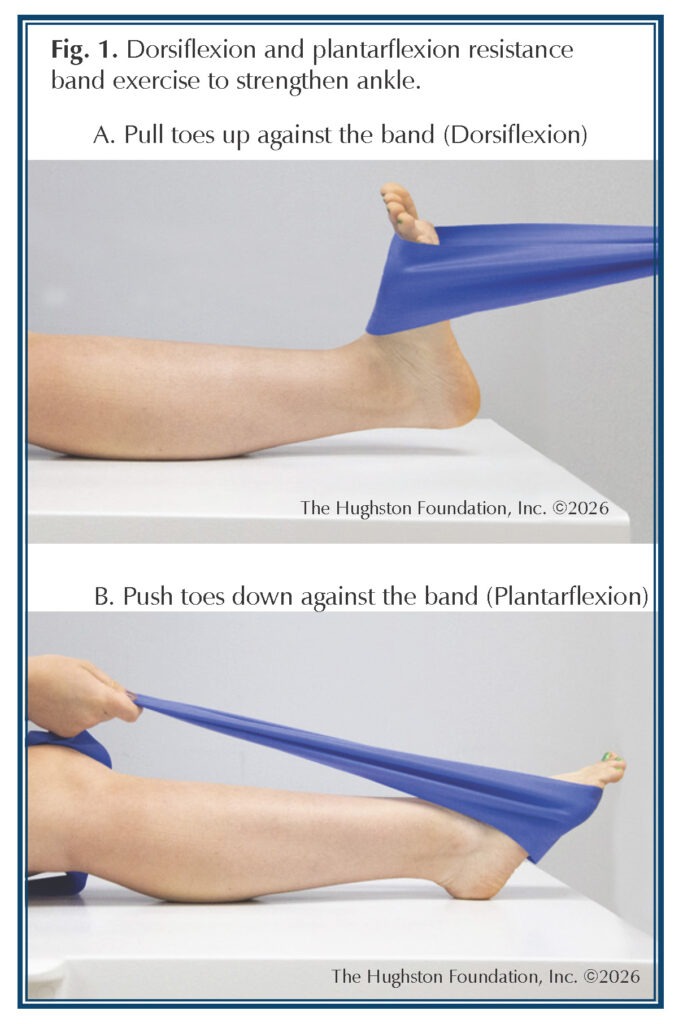
As motion improves, the physical therapist will gradually introduce strengthening exercises. The muscles surrounding the ankle provide important support, and rebuilding strength helps protect the joint. Exercises like heel raises (you slowly lift up onto your toes and lower back down) are a good starting point. Resistance bands can also gently work the ankle in different directions, improving control and coordination (Figs 1 & 2).
Another key part of recovery, balance training is often overlooked. After an ankle sprain, the body’s ability to sense position and movement can make the ankle feel less stable, especially during quick or uneven movements. Standing on one leg is a simple but effective way to retrain balance. Over time, you can progress by reducing hand support or adding more challenging surfaces.
As strength and balance improve, rehabilitation begins to look more like everyday movement. This stage often includes activities such as stepping, reaching, and changing direction. For athletes, you may eventually progress to running or sport-specific drills. The goal is to prepare the ankle for the demands of daily life or activity, while reducing the risk of another injury. Progression should be gradual, allowing the body time to adapt.
Working with a physical therapist
While many people start exercises on their own, working with a physical therapist can provide additional support and guidance. A therapist can identify areas of weakness, monitor progress, and adjust the program as needed. A physical therapist can be especially helpful for patients who have had repeated ankle sprains or for those trying to return to a higher level of activity.
Without proper rehabilitation, some individuals develop ongoing issues such as chronic ankle instability. The ankle can feel like it “gives way,” even during simple movements, and over time, this can lead to lower confidence during activity and a higher risk of further injury. Addressing these concerns early can help prevent long-term problems.
Recovery from an ankle sprain takes time and often requires patience. There may be times when you need to modify your activity, but staying consistent with rehabilitation can make a meaningful difference in the overall outcome. Even after returning to normal activity, continuing a few strengthening and balance exercises can help maintain progress and protect the joint.
Simple steps
There are also simple steps that can help reduce the risk of future ankle sprains. Wearing supportive footwear, taking time to warm up before activity, and being mindful of uneven surfaces are all helpful habits. For those with a history of ankle injuries, wearing a brace during higher-risk activities can provide additional support.
An ankle sprain may seem like a small setback, but it can have a lasting impact if not fully addressed. With the right approach to rehabilitation, most patients can return to their normal activities, safely and confidently. Focusing on full recovery—not just symptom relief—can help ensure the ankle is ready for whatever comes next.
Author: Mackenzie Koon, PT, DPT | Columbus, Georgia
Last edited on October 13, 2026