
In high school sports, injuries are an inevitable part of the game. Whether it’s a concussion in football, a torn ACL in basketball, or a stress fracture in track and field, athletes frequently face the difficult process of recovery and return to play (RTP). The decision regarding when an athlete can safely return to competition is a complex one, involving coaches, parents, athletic trainers, medical professionals, and, most importantly, the athlete. If an athlete returns too soon, they risk reinjury or long-term health consequences. If they are held out for too long, they may suffer setbacks in performance, frustration, and team-related challenges. This article explores the factors influencing RTP decisions, the role of healthcare professionals, guidelines for safe return, legal and ethical considerations, and the impact on student-athletes’ long-term health.
Factors influencing return to play decisions
Several factors must be considered before an athlete is cleared to return to play. These include the severity of the injury, the nature of the sport, the athlete’s position, the presence of lingering symptoms, and psychological readiness. Each injury requires a different recovery timeline. Minor sprains or muscle strains may take a few days to heal, while serious injuries like torn ligaments or concussions can take weeks or months. Medical guidelines and clinical assessments help determine whether an athlete has fully recovered. RTP decisions must be individualized based on the severity of the injury, ensuring that full strength, mobility, and endurance are restored before allowing an athlete back into competition.
The type of sport and the athlete’s position significantly impact the RTP timeline. Contact sports, such as football or wrestling, pose a higher reinjury risk than non-contact sports like swimming or golf. Additionally, an offensive lineman in football may require different RTP considerations than a quarterback due to the nature of their physical demands.
Physical recovery is only part of the equation. Psychological readiness plays a crucial role in RTP decisions, as athletes must regain confidence in their bodies and trust that they can perform without fear of reinjury. Fear of reinjury can impact performance and increase the likelihood of compensatory movements, potentially leading to additional injuries.
Role of healthcare professionals
Athletic trainers, physical therapists, and team physicians play a pivotal role in determining when an athlete can safely return to play. Their expertise in evaluating physical readiness and monitoring recovery is crucial in preventing premature RTP decisions. Athletic trainers are often the first to assess and treat injuries on the field. They work closely with athletes throughout rehabilitation, conducting functional movement tests and monitoring progress. According to the National Athletic Trainers’ Association (NATA), RTP decisions should be evidence-based and include objective measures such as strength tests, range of motion assessments, and sport-specific drills. Physical therapists focus on rehabilitation and recovery, ensuring that athletes regain strength, flexibility, and coordination before returning to competition. They design individualized exercise programs that address weaknesses and prevent reinjury. Team physicians have the final authority in RTP decisions, particularly for severe injuries like concussions, fractures, or ligament tears. They rely on clinical evaluations, imaging tests, and standardized RTP guidelines to make informed recommendations.
Guidelines for safe return to play
Several organizations have developed RTP guidelines to ensure athletes return to sports safely. These guidelines vary depending on the type of injury but generally follow a progressive approach.
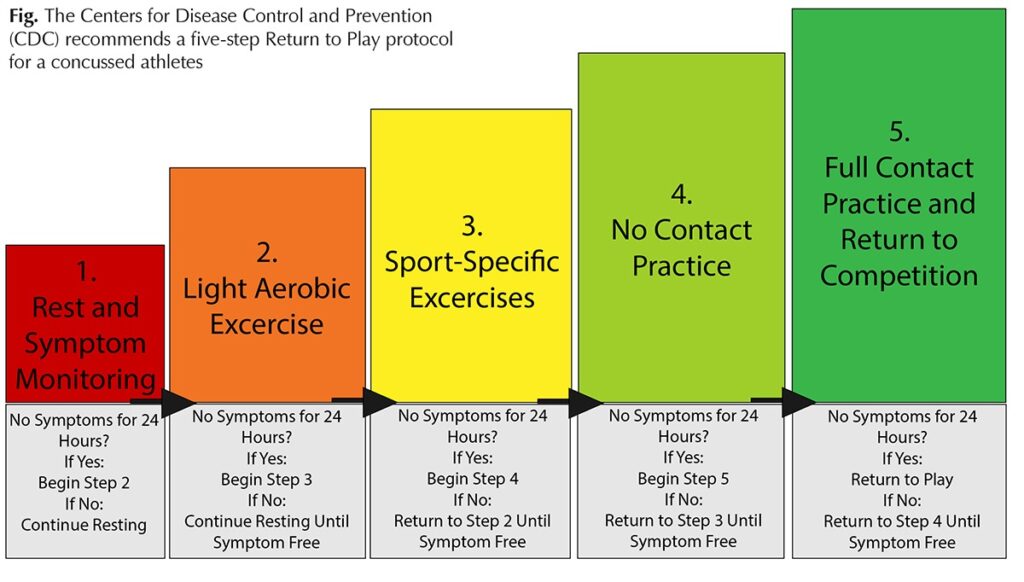
Concussion management. Concussions require a gradual return to play to prevent Second Impact Syndrome (SIS), a potentially fatal condition caused by a second head injury before the first one has healed. The Centers for Disease Control and Prevention (CDC) recommends a five-step RTP protocol for concussed athletes (Fig.).
Musculoskeletal injuries. For injuries like sprains, fractures, and ligament tears, RTP decisions are based on functional assessments rather than arbitrary timelines. An athlete must demonstrate full strength, mobility, and pain-free performance in sport-specific movements before clearance. The American Academy of Orthopaedic Surgeons (AAOS) emphasizes progressive strengthening exercises and functional movement testing before RTP.
Pressure from coaches and parents
RTP decisions are not just medical; they also carry legal and ethical implications. Schools, coaches, and medical professionals must ensure that decisions prioritize athlete safety over competitive pressures. High school athletes often feel pressure from coaches, teammates, and parents to return to play quickly. This pressure can lead to premature RTP, increasing the risk of reinjury. Coaches and parents must trust the medical professionals involved and prioritize long-term health over immediate competition. Effective communication between athletic trainers, physicians, coaches, and parents is essential to ensure informed and responsible RTP decisions.
If an athlete is cleared too soon and sustains further injury, schools and medical professionals may face legal consequences. Parents have sued schools for negligence when improper RTP decisions resulted in long-term health complications for their child. To mitigate liability, schools should enforce strict adherence to evidence-based RTP protocols and maintain thorough documentation of the decision-making process.
Athlete autonomy and long-term health
High school athletes may downplay symptoms to expedite their return. However, allowing them to make RTP decisions without medical oversight can have devastating consequences. Premature RTP can lead to chronic injuries, arthritis, and post-concussion syndrome later in life. Educating athletes about the risks of returning too soon is critical to long-term health.
A careful balance
Return to play decisions in high school sports require a careful balance between physical recovery, psychological readiness, and medical best practices. Athletic trainers, physicians, and physical therapists play crucial roles in evaluating athletes and ensuring a safe return to competition. RTP guidelines, particularly for concussions and musculoskeletal injuries, help standardize the decision-making process and minimize reinjury risks. Legal and ethical considerations further emphasize the importance of prioritizing athlete well-being over external pressures. Ultimately, ensuring a safe and responsible RTP process protects young athletes from long-term harm and supports their future in sports and overall health.
Author: Eric Goodrich, DO | Columbus, Georgia
Last edited on February 26, 2026